Radboud University
Nijmegen
- Personal approach;
- high quality teaching;
- strong links to research;
- state of the art infrastructure.

About
Entry qualification
Accommodation
Radboud University - where Nobel Prize winners and prime ministers studied
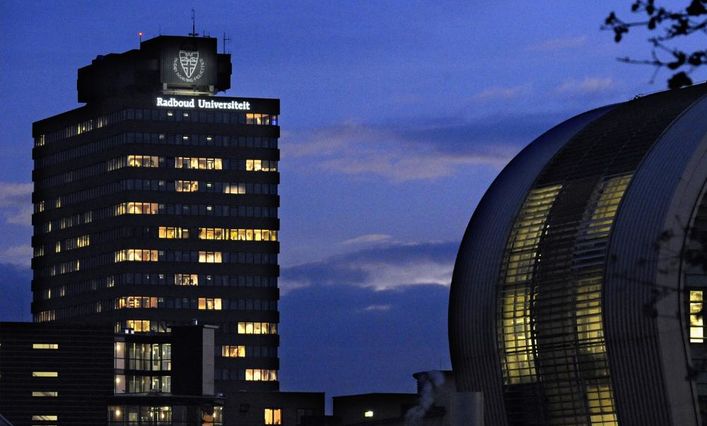
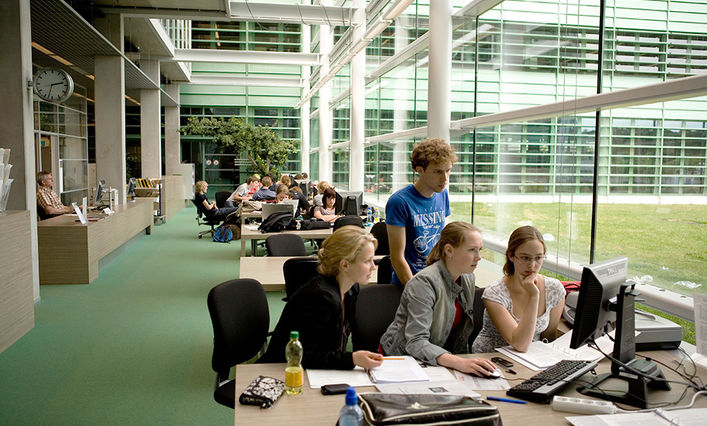
Radboud University in Nijmegen is a top-ranked research university with 13 English-taught bachelor programs and over 31 master programs. It is the place where graphene (the thinnest material in the world) was discovered - earning its researchers a Nobel Prize in Physics. Four Dutch prime ministers studied or taught here. In national rankings, Radboud consistently scores #1 for student satisfaction among all Dutch research universities.
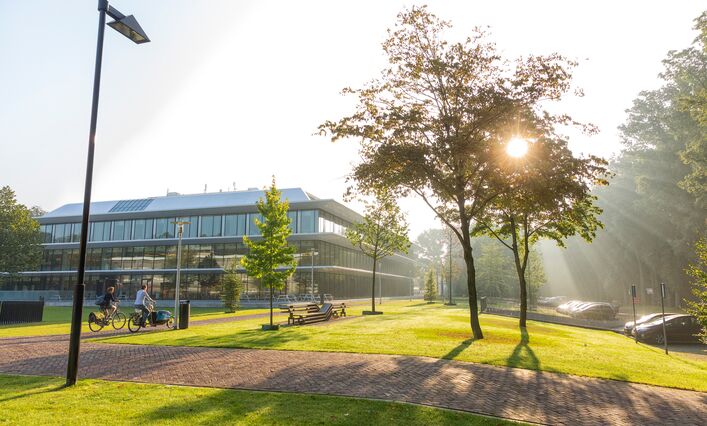
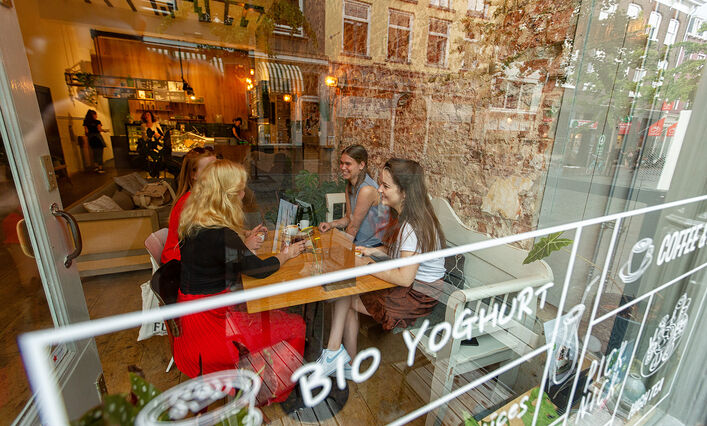
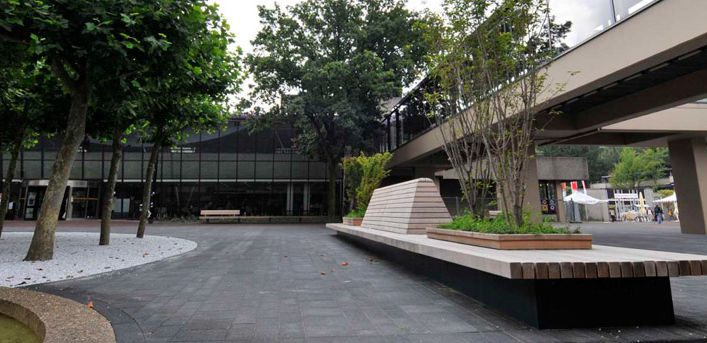
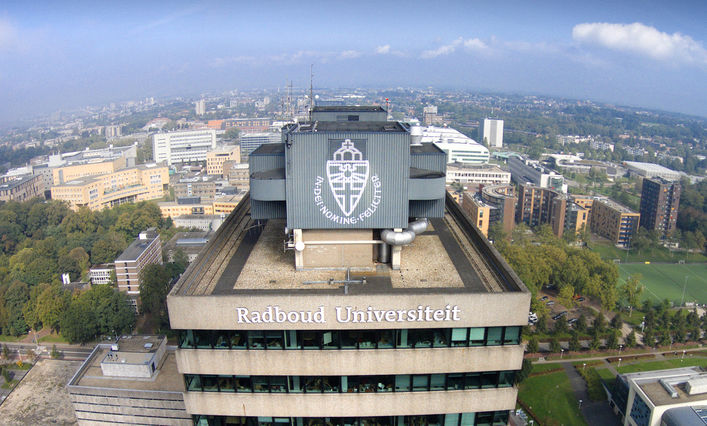
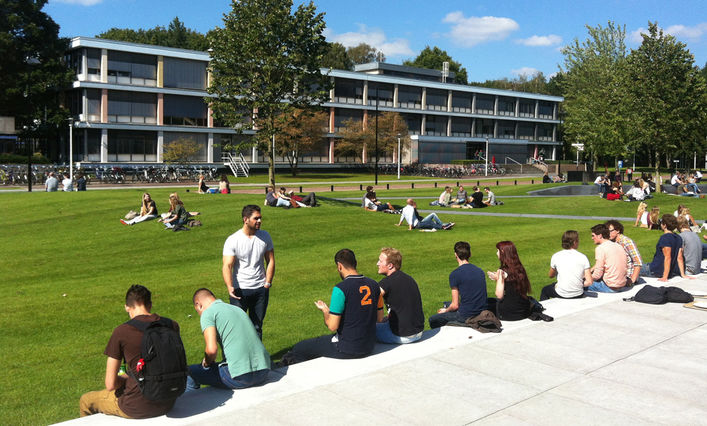
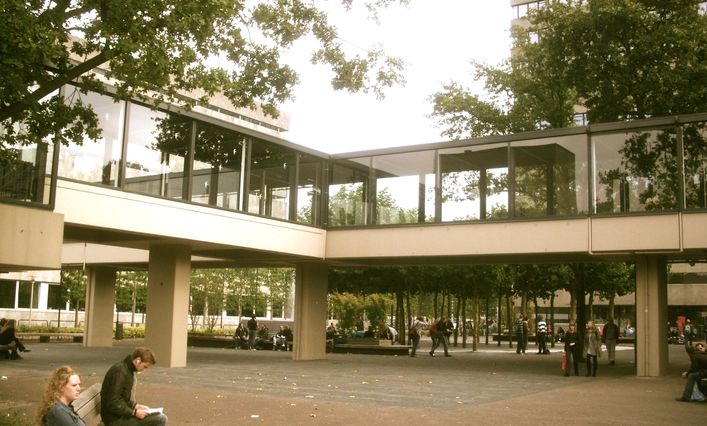
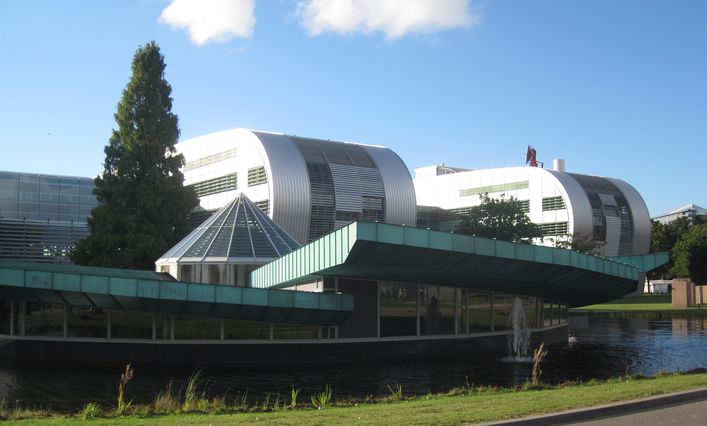
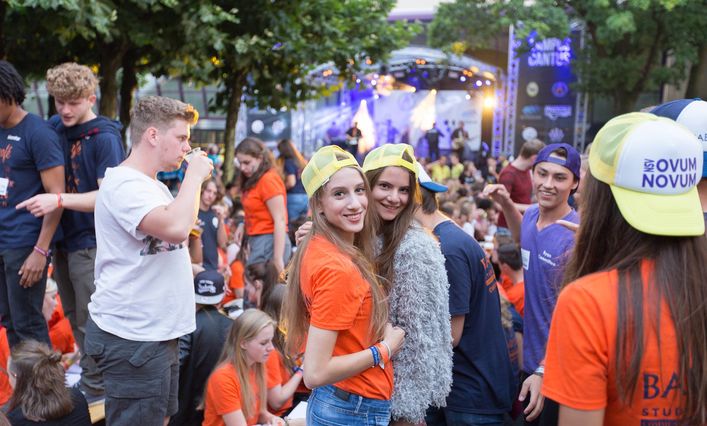
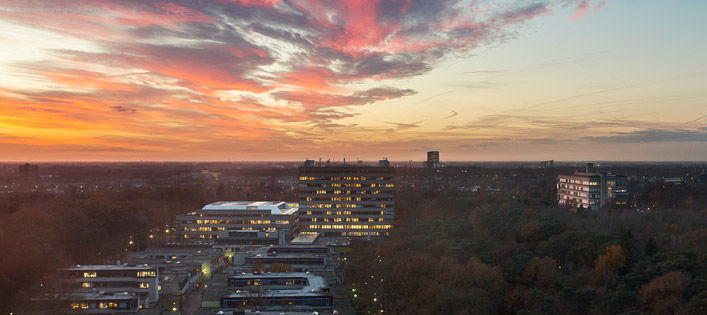
Nijmegen is the oldest city in the Netherlands (over 2,000 years old), yet it has one of the youngest populations - one in four residents is under 35. This creates a unique mix of history and student energy. The campus is a self-contained "city within a city" with everything you need: libraries, labs, sports facilities, cafés, and green spaces. 98% of students say they feel safe and satisfied on campus.
This is Radboud University
A day in the life at Radboud
Follow international students through their daily life at Radboud University and in Nijmegen.
Why students choose Radboud
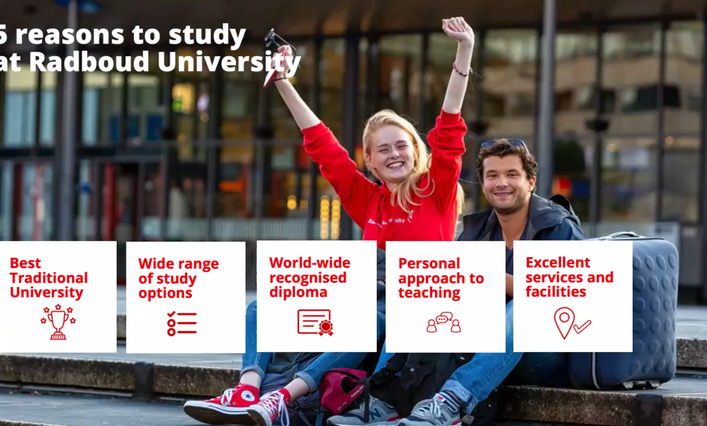
- Nobel Prize-winning research. Graphene was discovered in Radboud's labs. You study at a university where world-changing research happens daily - and as a student, you can participate in cutting-edge research projects from your first year.
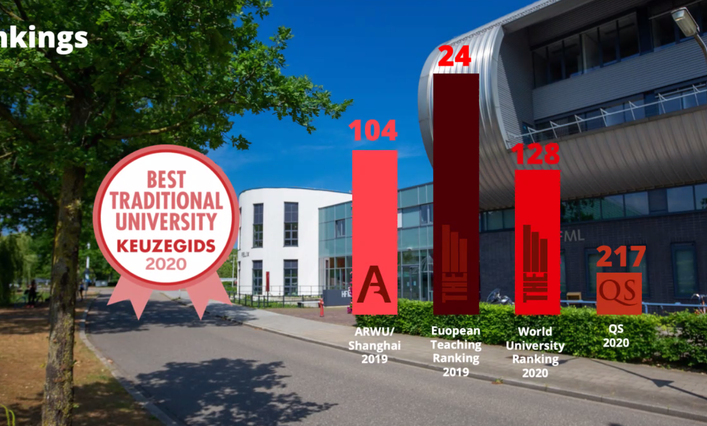
- #1 student satisfaction in the Netherlands. 93.7% of students are fully satisfied with their studies - the highest score among all Dutch research universities. Small lecture groups, personal attention from professors, and freedom to choose your courses make the difference.
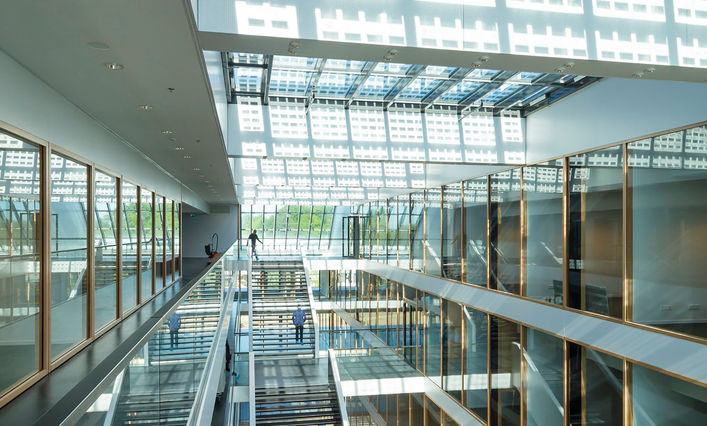
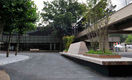
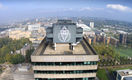
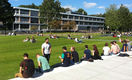
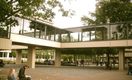
- Beautiful self-contained campus. Unlike most Dutch universities spread across a city, Radboud has a green, park-like campus with everything in one place: faculties, library, sports centre (1,000m² gym, climbing walls, tennis courts), cafés, and student housing.
- Financial support for working students. The Netherlands offers a financial support system for EU students who work alongside their studies. Learn more about financial support here.
- Nijmegen - oldest city, youngest vibe. The oldest city in the Netherlands with the youngest population. Vibrant nightlife, festivals, student associations, and a sustainable lifestyle recognized by The Times as one of Europe's best destinations.
- 13 bachelor + 31 master programs in English. From Artificial Intelligence and Computing Science to International Business and Psychology - Radboud offers one of the widest selections of English-taught programs among Dutch research universities.
Study programs at Radboud
Radboud offers 13 English-taught bachelor programs including:
- Artificial Intelligence
- Computing Science
- International Business Administration
- Economics and Business Economics
- Psychology
- Biology
- Chemistry
- Molecular Life Sciences
- Philosophy, Politics and Society
- English Language and Culture
- American Studies
Plus 31 master programs in English across all faculties. The exact list of study programs available through the Kastu platform can be found at the top of this university description, next to the logo.
Campus tour at Radboud University
Student Ellis shows you around the Radboud campus - faculties, study spots, and sports facilities.
Nijmegen - your student city
Nijmegen is the oldest city in the Netherlands (founded by the Romans over 2,000 years ago), yet it feels young and vibrant. One in four residents is under 35, creating an energetic student atmosphere. The city is known for its beautiful location on the river Waal, historic centre, and the famous Four Day Marches (Vierdaagse) - the world's largest walking event.
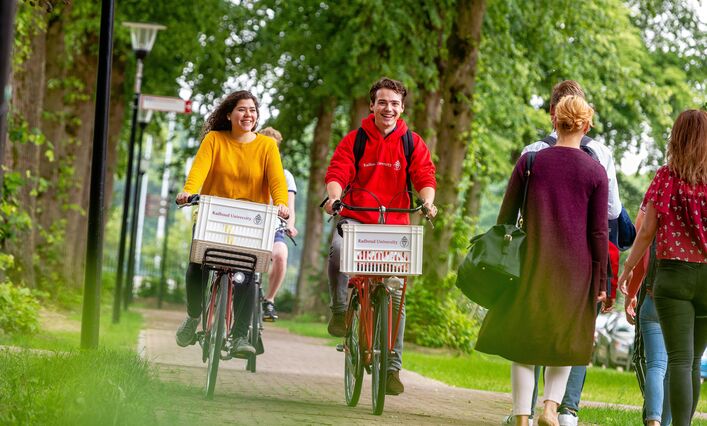
The Times named Nijmegen one of the most sustainable destinations in Europe. The city promotes a healthier, happier lifestyle with green spaces, car-free zones, and a Michelin-starred restaurant that forages ingredients from the nearby forest. For students, Nijmegen offers vibrant nightlife, cultural events, and a compact, bike-friendly layout.
Quick facts
| Type | Research University (WO) |
|---|---|
| Founded | 1923 |
| English bachelor programs | 13 |
| English master programs | 31 |
| Location | Nijmegen (oldest city in NL) |
| Student satisfaction | #1 among Dutch research universities (93.7%) |
| Notable achievement | Nobel Prize in Physics (graphene discovery) |
| Campus | Self-contained green campus with all facilities |
FAQ
What is the difference between a research university and a university of applied sciences?
Radboud is a research university (WO), which means the education is more theoretical and research-oriented compared to universities of applied sciences (HBO). You develop deep analytical thinking, conduct research, and can continue to a PhD. Research university graduates often work in research, policy, consulting, or specialized professional roles. Both types are excellent - it depends on whether you prefer theoretical depth (WO) or practical application (HBO).
What makes Radboud's campus special?
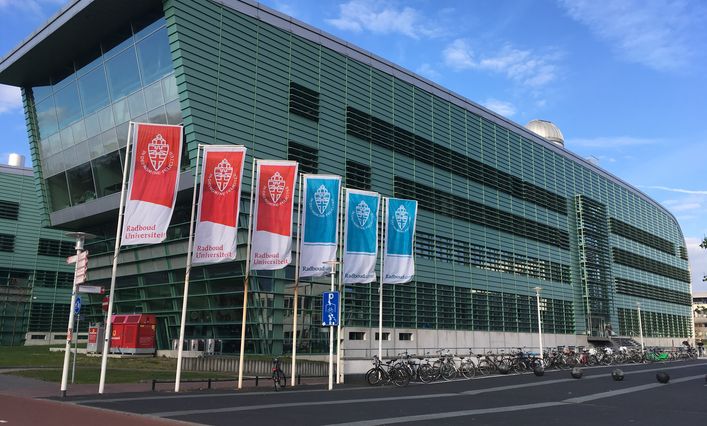
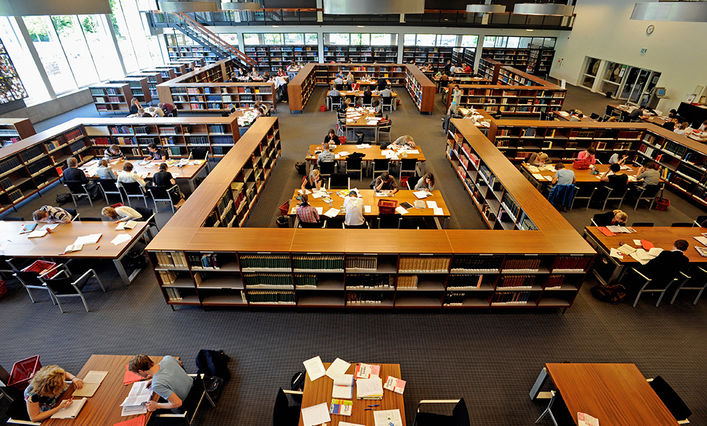
Unlike most Dutch universities that are spread across a city, Radboud has a beautiful, self-contained campus. Everything is in one green, park-like area: all faculties, the university library, a sports centre with a 1,000m² gym, climbing walls, tennis courts, running tracks, cafés, restaurants, and even student housing. 98% of students say they feel safe and satisfied on campus. It creates a real community feeling that is rare in the Netherlands.
Can I work while studying at Radboud?
Yes! As an EU student, you can work alongside your studies without restrictions. Nijmegen has job opportunities in hospitality, retail, and through the university's network. The Netherlands has a financial support system for working students that can help cover living costs. Learn more about financial support for students in the Netherlands.
Bachelor
Entry qualification
- Transcript of Records – If you have not yet completed Secondary School, you must upload a transcript showing your current grades. You can find the transcript template here.
- Secondary School Leaving Certificate – If you have already completed Secondary School, you do not need to upload a separate transcript. Simply upload your Secondary School Leaving Certificate to the application.
An additional document, Statement of Education, may be required depending on the programme you apply for at this university.
If this document is required, it will appear in the Documents section of the Kastu application form once you start your application.
Depending on the programme, the following may be required as part of the application process:
- CV/Resume in English
- Motivation Letter in English
Important! View the full requirements on the university’s official website. Requirements may vary depending on your nationality and the country where you completed your previous education.
English language requirements
You may not need to take IELTS or TOEFL. University usually allow you to prove your English proficiency in one of the following ways:
- TOEFL iBT*
- IELTS Academic
- A Cambridge English qualification
- A national English examination listed on your secondary school leaving certificate
- An English subject and grade on your secondary school leaving certificate that meet the university’s requirements
- Secondary education completed in English in a country or school qualification accepted by the university
- An International Baccalaureate (IB) or European Baccalaureate (EB) diploma
- Other
Important: Accepted methods and minimum results depend on study programme, your secondary school qualification and the country where you completed your education. Check the official requirements for your chosen study programme.
*Use the Kastu promo code LTU1000102 when registering for TOEFL iBT and receive a 5% discount.
Master
Entry qualification
- ECTS transcript – If you are still completing your Bachelor’s degree, upload an ECTS transcript showing the subjects you have studied, your grades, and the number of credits awarded. Your Bachelor’s diploma must be uploaded later, as soon as you receive it.
- Bachelor’s diploma – If you have already graduated, upload your Bachelor’s diploma. A separate ECTS transcript is not required.
Note: Your Bachelor’s degree must be in the same or a related field as the Master’s programme you are applying for. The university will check whether you have completed enough relevant subjects and ECTS credits.
Important! View the full requirements on the university’s official website. Requirements may vary depending where you completed your bachelor education.
English language requirements
Applicants have to prove their English language skills either by an internationally recognized language test or upon previous studies. Usually English language skills can be proved by the following documents:
- TOEFL iBT*
- IELTS Academic
- A Cambridge English qualification
- Higher education degree completed in English
- Secondary education completed in English in a country or school qualification accepted by the university
- An English subject and grade on your secondary school leaving certificate that meet the university’s requirements
- Other
Important: Accepted methods and minimum results depend on study programme and the country where you completed your education. Check the official requirements for your chosen study programme.
*Use the Kastu promo code LTU1000102 when registering for TOEFL iBT and receive a 5% discount.
Finding your home in Nijmegen
Radboud University works with SSH& (formerly SSHN) - the student housing provider in Nijmegen - to help international students find accommodation. International first-year degree students get priority when registering for SSH& housing. While housing is not guaranteed, the system gives you a strong advantage if you register early.
Nijmegen is more affordable than the big Randstad cities (Amsterdam, Utrecht, Rotterdam), and the housing market is less competitive. Many student rooms are located close to or on the Radboud campus, which means you can walk or cycle to lectures in minutes.
How does student housing work at Radboud?
Everything you need to know about SSH& housing and finding a room in Nijmegen as an international student.
Your housing options
SSH& Student Housing (recommended) - the main student housing provider in Nijmegen. International first-year degree students get priority registration. SSH& offers furnished and unfurnished rooms, studios, and apartments. Register as soon as you receive your admission confirmation.
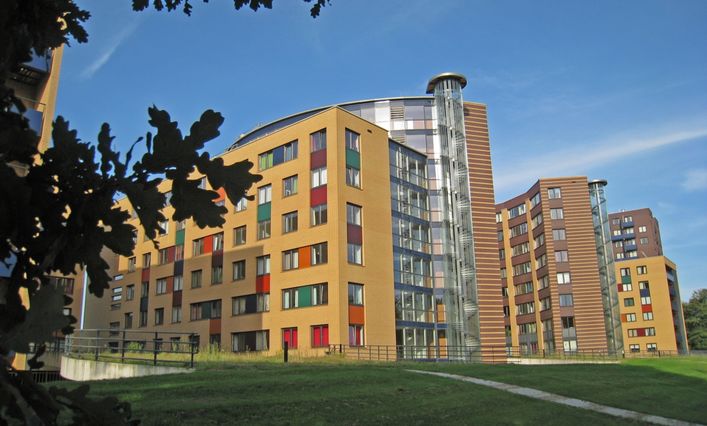
On-campus housing - some SSH& rooms are located directly on the Radboud campus, giving you the shortest possible commute to lectures and access to all campus facilities.
Private housing - websites like Kamernet and HousingAnywhere list rooms in Nijmegen.
Facebook groups - search for "Student Housing Nijmegen" or "Kamers Nijmegen" for additional options.
Practical details
- SSH& rooms: typically 350-600 EUR per month
- Nijmegen is more affordable than Amsterdam, Utrecht, or Rotterdam
- International first-year students get priority at SSH&
- Register for SSH& immediately after receiving your admission
- Many rooms are close to or on the Radboud campus
- The city is compact and bike-friendly - everything within cycling distance
Remember: the Netherlands has a financial support system for EU students who work alongside their studies. Learn more about financial support here.
FAQ
Do international students get priority for housing?
Yes! International first-year degree students get priority when registering for SSH& housing in Nijmegen. This means you are placed higher on the waiting list than other applicants. Register as soon as you receive your admission confirmation from Radboud to maximize your chances. While it is not a guarantee, most international students who register early find housing through SSH&.
How much does student housing cost in Nijmegen?
Nijmegen is one of the more affordable student cities in the Netherlands. SSH& rooms typically cost 350-600 EUR per month, depending on size and type (shared or private facilities). This is significantly cheaper than Amsterdam or Utrecht. Combined with the Dutch financial support system for working students, living in Nijmegen is very manageable. Learn more about financial support here.
Can I live on the Radboud campus?
Yes! Some SSH& rooms are located directly on the Radboud campus. This is a unique advantage - you can walk to lectures, the library, sports centre, and cafés in minutes. Living on campus also means you are part of a close-knit student community. When registering with SSH&, indicate your preference for on-campus housing.
For complete information about housing at Radboud, visit the official page.
































Student stories