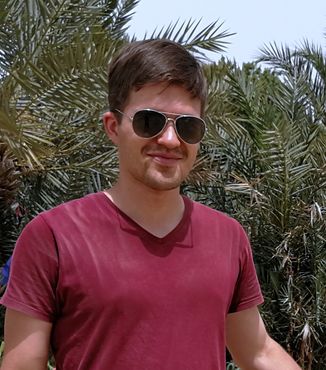
Hello, future student!
My name is Tautvydas Karvelis, and I am currently completing my fourth and final year at HAN University of Applied Sciences. After several years in Arnhem, I have gained plenty of experience with the university, the city, and everyday life in the Netherlands.
I became interested in Automotive Engineering during my early years of Secondary School. I liked cars, although, to be honest, I did not yet fully understand what automotive engineers actually did.
I also knew that I wanted to study abroad. I wanted to experience life in another country, meet people from different cultures, and gain knowledge that could later support my professional career.
While researching my options, I discovered Kastu. Based on my interest in Automotive Engineering, I considered Denmark and the Netherlands.
I joined a Kastu university tour to Denmark, but the country did not feel quite right for me. I therefore chose the Netherlands, even though I knew very little about it at the time.
During my final year of Secondary School, I submitted my application. A few weeks later, I received a conditional offer confirming that I would be accepted after completing school and receiving my diploma.
Suddenly, the plan became real.
At the end of August, I packed my belongings and travelled to the Netherlands alone.
I was genuinely nervous before leaving. My friends were staying at home, while I was moving to a country I barely knew. However, the reality was much less frightening than I had imagined.
After arriving in Arnhem by train, I found my student residence. Dutch public transport made travelling between cities relatively convenient, although owning a bicycle soon became essential for everyday life.
I lived in student accommodation during my first year. I had a private room, while the kitchen and bathroom were shared. The building was modern and home to almost 200 students from different countries.
There was even a student bar inside the residence.
Several first-year Automotive Engineering students lived there as well, so I met some of my future classmates before lectures began. Knowing familiar faces made my first days at university much easier.
My strongest practical advice after arriving in the Netherlands is to buy a bicycle. The cycling infrastructure is excellent, and you can reach almost everything quickly and conveniently.
Second-hand shops are also extremely useful. I bought many of the things I needed there for much less than they would have cost new. Exploring Arnhem on foot and by bicycle also helped me understand the city and feel at home much faster.
Automotive Engineering at HAN
The quality of my programme has been excellent.
The lecturers are friendly, approachable, and genuinely interested in helping students. It is normal to contact them with questions, and many respond even outside regular university hours.
What I value most is the balance between theory and practice.
The programme is structured around approximately equal amounts of theoretical and practical learning. At the beginning of a week, we might study how a petrol engine works. Later, we apply that knowledge by partially disassembling an engine, measuring its components, and completing technical calculations.
You do not only read about engineering. You work with real systems and learn how they function with your own hands.
During the first year, we studied the general foundations of Automotive Engineering. In the second year, the subjects became more specialised and project work became more important.
The third year included a six-month internship, which could be completed at a company in almost any country. Students could later choose whether to focus more strongly on areas such as testing or development.
During the final year, we selected a specialisation, such as engines, electronics, or automotive component production. The final six months were devoted to a graduation project completed in cooperation with a company.
This structure means that students leave university with much more than academic knowledge. They gain project experience, practical technical skills, and an understanding of how engineering work is completed in professional organisations.
The programme is not easy. You need to attend lectures, complete assignments, prepare for examinations, and remain disciplined.
However, when you participate actively and do the required work, the studies are completely manageable.
HAN also offers opportunities far beyond regular lectures.
Students can join motorsport teams, including Formula Student, motorcycle racing, and rally projects. These teams allow students to design, build, test, and improve real vehicles while working together on ambitious engineering challenges.
HAN students have even developed vehicles for major international competitions. These projects show how far practical education can go when motivated students combine their knowledge and creativity.
International life and independence
The university has an active student association that organises events and activities. Because HAN welcomes many international students, making friends from different parts of the world is relatively easy.
People are generally open and willing to help. Often, you do not even need to ask—someone notices that you are struggling and offers support.
Living in such an international community teaches you how to communicate with people who have different habits, expectations, and ways of thinking.
It also gives you friends and professional contacts in countries you may never have imagined visiting.
Combining studies with a part-time job is possible. I worked as a food-delivery driver using a scooter, usually for around 25 hours per week.
At times, balancing that workload with university was challenging, but with careful planning, it was possible. Speaking Dutch was not essential for my position, although learning the local language can certainly create more employment opportunities.
Financial support rules for working students may change, so future students should always check the current official requirements instead of relying on older experiences.
For me, working alongside my studies provided much more than income. It allowed me to become independent from my parents, manage my own finances, and save money for travelling.
Studying abroad taught me how to take full responsibility for my own life.
One thing you should prepare for is the Dutch weather. The maritime climate brings plenty of rain, so a good raincoat will become one of your most useful possessions.
Despite the rain, the workload, and the initial fear of leaving home, studying at HAN was completely worth it.
I gained a high-quality education, practical engineering experience, international friendships, and the confidence to live independently in another country.
My advice is to prepare carefully but not overthink every possible problem. Find accommodation early, buy a bicycle, participate in student activities, and ask lecturers or classmates for help whenever you need it.
Most importantly, take advantage of the practical opportunities offered by the university.
Automotive Engineering is not something you can learn only from books. At HAN, you can build, test, experiment, and begin becoming an engineer before you graduate.
Thank you for reading my story. I hope it helped you understand what studying and living in Arnhem can really be like.
Good luck, and perhaps I will see you at HAN University of Applied Sciences!
Best wishes from Arnhem,
Tautvydas